Vatsaka Kalpa Adhyaya: Difference between revisions
| Line 66: | Line 66: | ||
*Vipaka: Katu. <ref>Prof. P.V. Sharma, Dravyaguna- Vigyana, Vol.II, Chaukhambha Bharati Academy, Varanasi, Reprint 1998, pp 465.</ref> | *Vipaka: Katu. <ref>Prof. P.V. Sharma, Dravyaguna- Vigyana, Vol.II, Chaukhambha Bharati Academy, Varanasi, Reprint 1998, pp 465.</ref> | ||
''Vatsaka'' leaves are used to treat ''kushtha'' (dermatosis), ''kilasa'' (dermatosis), ''indralupta'' (alopecia), ''arsha'' (hemorrhoids), ''bhagandara'' (fistula in ano) etc. | ''Vatsaka'' leaves are used to treat ''kushtha'' (dermatosis), ''kilasa'' (dermatosis), ''indralupta'' (alopecia), ''arsha'' (hemorrhoids), ''bhagandara'' (fistula in ano) etc.[ Cha. Sa. [[Sutra Sthana]] 3/4] | ||
Its fruits are used in ''stanyasodhana mahakasaya''[Cha. Sa.[[Sutra Sthana]] 4/18] ''asthapanopaga mahakasaya''.[ Cha. Sa. [[Sutra Sthaa]] 4/25] | |||
''Vatsaka'' is used as an ingredient in triphaladi kwatha and mustadi kwatha to treat ''prameha''.<ref>[Cha. Sa. [[Sutra Sthana]] 23/10-13]Seeds of ''vatsaka'' (''indrayava'') are used in kushtha.<ref>Pandit Kashi Nath Shastri, Dr. Gorakhanath Chaturvedi, Charaka Samhita, 2nd part,Chikitsasthana, Chap 7, shlok no.94, Reprint2012, Chaukhambha Bharati Academy, Varanasi, pp 264.</ref> In [[Arsha Chikitsa]] bark of ''kutaja'' and ''indrayava'' used as ''rasakriya''.[Cha. Sa.[[Chikitsa Sthana]] 14/188-190]. | |||
'''Uses''': Bark is used in dysentery and is prescribed in piles, anemia, asthma, bronchopneumonia, dropsy, dysurea, influenza, rheumatism, tooth- ache, vomiting and nausea, intestinal worms dyspepsia, chest complaints and the diseases of skin and the spleen.<ref>Ravindra Sharma, Medicinal Plants of India, 2003, Daya Publishing House, Delhi. pp 127.</ref> | '''Uses''': Bark is used in dysentery and is prescribed in piles, anemia, asthma, bronchopneumonia, dropsy, dysurea, influenza, rheumatism, tooth- ache, vomiting and nausea, intestinal worms dyspepsia, chest complaints and the diseases of skin and the spleen.<ref>Ravindra Sharma, Medicinal Plants of India, 2003, Daya Publishing House, Delhi. pp 127.</ref> | ||
Revision as of 06:08, 24 September 2020
Kalpa Sthana Chapter 5.Pharmaceutical preparations of Vatsaka
| Section/Chapter | Kalpa Sthana Chapter 5 |
|---|---|
| Preceding Chapter | Dhamargava Kalpa Adhyaya |
| Succeeding Chapter | Kritavedhana Kalpa Adhyaya |
| Other Sections | Sutra Sthana, Nidana Sthana, Vimana Sthana, Sharira Sthana, Indriya Sthana, Chikitsa Sthana, Siddhi Sthana |
| Translator and commentator | Dwivedi K.N.,Sharma P. |
| Reviewer | Chavan S., Nishteswar K. |
| Editor | Nishteswar K., Sawant B. |
| Date of publication | December 17, 2018 |
Abstract
Pharmaceutical preparation of vatsaka (Holarrhena antidysentrica Linn.Wall.) , its synonyms, and the difference between male and female plants (along with their pharmaceutical preparations) are described. The seeds of vatsaka are known as indrayava or kalingaka. Fruits and seeds are used for therapeutic emesis. Vatsaka is used to treat raktapitta, kapha, vatarakta, visarpa and several other diseases. Total eighteen formulations are prepared in different medium like decoction of various drugs, water and krasara. It is beneficial for delicate persons.
Keywords: Indrayava, Decoction, Vatarakta, Visarpa. Holarrhena antidysentrica Linn.Wall.
Introduction
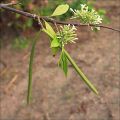
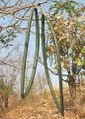
Vatsaka (Holarrhena antidysentrica Linn.Wall.) is used for emesis. Its fruits and seeds are used for this purpose. Synonyms of vatsaka are kutaja, sakra, vraksaka, girimallika. Botanical name of male plant is Holarrhena antidysenterica Wall. Its fruits are big, in group of two and not joined; flowers of white colour and leaves are smooth. It is also called as shweta kutaja or punkutaja. Its seed are tikta. Botanical name of female plant is Wrightia tinctoria R. Br. It fruits in group of two which are joined at end, flowers of blackish or reddish in color. Its seeds are madhura. It is also called as stri kutaja or krishna kutaja. Indrayava and its wet bark is used. It is used mostly in rakta atisara or old ama atisara (Chronic amoebic dysentery), also in raktapitta.

Latin name: Holarrhena antidysenterica Linn. Wall.
Family: Apocynaceae
English name: Kurchi[1]
Botanical Description: A shrub or small tree, glabrous or pubescent; bark pale. Leaves 10-20 by 5 - 11.5cm. from broadly ovate to elliptic, obtuse or obtusely acuminate, glabrous or more or less pubescent, base usually obtuse; main nerves 10-14 pairs, conspicuous; petiole 3mm long. Flowers white , inodorous, in terminal corymbose cymes 7.5 -15 cm. diam.; pedicels slender; bracts small, lanceolate, pubescent and ciliate. Follicles 20-38cm. long, 6-8mm diam., cylindric, often dotted with white spots. Seeds 8mm. long or rather more, linear – oblong, tipped with a spreading deciduous coma of brown hairs 2-2.5cm. long.[2]
Distribution: It is distributed throughout India, especially in the wet forests and tropical Himalayas, up to an altitude of 1200m.
- Rasa: Tikta, kashaya
- Guna: Laghu, ruksha.
- Veerya: Sheeta.
- Vipaka: Katu. [3]
Vatsaka leaves are used to treat kushtha (dermatosis), kilasa (dermatosis), indralupta (alopecia), arsha (hemorrhoids), bhagandara (fistula in ano) etc.[ Cha. Sa. Sutra Sthana 3/4] Its fruits are used in stanyasodhana mahakasaya[Cha. Sa.Sutra Sthana 4/18] asthapanopaga mahakasaya.[ Cha. Sa. Sutra Sthaa 4/25]
Vatsaka is used as an ingredient in triphaladi kwatha and mustadi kwatha to treat prameha.Cite error: Closing </ref> missing for <ref> tag In Arsha Chikitsa bark of kutaja and indrayava used as rasakriya.[Cha. Sa.Chikitsa Sthana 14/188-190].
Uses: Bark is used in dysentery and is prescribed in piles, anemia, asthma, bronchopneumonia, dropsy, dysurea, influenza, rheumatism, tooth- ache, vomiting and nausea, intestinal worms dyspepsia, chest complaints and the diseases of skin and the spleen.[4]
Chemical constituents: Major total alkaloids 4%; bioactive steroidal alkaloid conessine 0.4%; kurchicine, conkurchine, holarrhine. Others- steroidal alkaloids, kurchiline.[5]
Sanskrit Text, Transliteration with English Translation
अथातो वत्सककल्पं व्याख्यास्यामः||१||
इति ह स्माह भगवानात्रेयः||२||
athātō vatsakakalpaṁ vyākhyāsyāmaḥ||1||
iti ha smāha bhagavānātrēyaḥ||2||
Now we shall expound the chapter "Vatsaka kalpa"(Pharmaceutical preparations of Vatsaka). Thus said Lord Atreya.[1-2]
Types and synonyms of vatsaka
अथ वत्सकनामानि भेदं स्त्रीपुंसयोस्तथा|
कल्पं चास्य प्रवक्ष्यामि विस्तरेण यथातथम्||३||
वत्सकः कुटजः शक्रो वृक्षको गिरिमल्लिका|
बीजानीन्द्रयवास्तस्य तथोच्यन्ते कलिङ्गकाः||४||
बृहत्फलः श्वेतपुष्पः स्निग्धपत्रः पुमान् भवेत्|
श्यामा चारुणपुष्पा स्त्री फलवृन्तैस्तथाऽणुभिः ||५||
रक्तपित्तकफघ्नस्तु सुकुमारेष्वनत्ययः|
हृद्रोगज्वरवातासृग्वीसर्पादिषु शस्यते||६||
atha vatsakanāmāni bhēdaṁ strīpuṁsayōstathā|
kalpaṁ cāsya pravakṣyāmi vistarēṇa yathātatham||3||
vatsakaḥ kuṭajaḥ śakrō vr̥kṣakō girimallikā|
bījānīndrayavāstasya tathōcyantē kaliṅgakāḥ||4||
br̥hatphalaḥ śvētapuṣpaḥ snigdhapatraḥ pumān bhavēt|
śyāmā cāruṇapuṣpā strī phalavr̥ntaistathā'ṇubhiḥ ||5||
raktapittakaphaghnastu sukumārēṣvanatyayaḥ|
hr̥drōgajvaravātāsr̥gvīsarpādiṣu śasyatē||6||
atha vatsakanAmAni bhedaM strIpuMsayostathA|
kalpaM cAsya pravakShyAmi vistareNa yathAtatham||3||
vatsakaH kuTajaH shakro vRukShako girimallikA|
bIjAnIndrayavAstasya tathocyante kali~ggakAH||4||
bRuhatphalaH shvetapuShpaH snigdhapatraH pumAn bhavet|
shyAmA cAruNapuShpA strI phalavRuntaistathA~aNubhiH ||5||
raktapittakaphaghnastu sukumAreShvanatyayaH|
hRudrogajvaravAtAsRugvIsarpAdiShu shasyate||6||
Now I shall say in detail about the synonyms, difference between male and female plants and pharmaceutical preparation. [3]
Vatsaka, kutaja, shakra, vrikshaka and girimallika are synonymous. Its seeds are known as indrayava with synonyms as kalingaka.[4]
The male plant has big fruits, white flowers and smooth leaves while the female one is blackish, with reddish flowers and smaller fruits and their stalk.[5]
Vatsaka destroys raktapitta and kapha, is free from harmful effects and as such useful for the delicate persons. It is indicated in cardiac disorders, fever, vatarakta, erysipelas etc.[6]
Various preparations
काले फलानि सङ्गृह्या तयोः शुष्काणि निक्षिपेत् |
तेषामन्तर्नखं मुष्टिं जर्जरीकृत्य भावयेत् ||७||
मधुकस्य कषायेण कोविदारादिभिस्तथा|
निशि स्थितं विमृद्यैतल्लवणक्षौद्रसंयुतम्||८||
पिबेत्तद्वमनं श्रेष्ठं पित्तश्लेष्मनिबर्हणम्|९|
kālē phalāni saṅgr̥hyā tayōḥ śuṣkāṇi nikṣipēt |
tēṣāmantarnakhaṁ muṣṭiṁ jarjarīkr̥tya bhāvayēt ||7||
madhukasya kaṣāyēṇa kōvidārādibhistathā|
niśi sthitaṁ vimr̥dyaitallavaṇakṣaudrasaṁyutam||8||
pibēttadvamanaṁ śrēṣṭhaṁ pittaślēṣmanibarhaṇam|9|
kAle phalAni sa~ggRuhyA tayoH shuShkANi nikShipet |
teShAmantarnakhaM muShTiM jarjarIkRutya bhAvayet ||7||
madhukasya kaShAyeNa kovidArAdibhistathA|
nishi sthitaM vimRudyaitallavaNakShaudrasaMyutam||8||
pibettadvamanaM shreShThaM pittashleShmanibarhaNam|9|
The fruit (seeds) of both the types when mature and dry should be collected in proper time. They should be crushed in quantity as borne in closed fist (40 gm) and impregnated with the decoction of madhuka and kovidaradi drugs and kept there in for the whole night. In the next morning it should be pressed and added with salt and honey. [7-8]
This excellent emetic should be taken to eliminate pitta and kapha.[9]
अष्टाहं पयसाऽऽर्केण तेषां चूर्णानि भावयेत्||९||
जीवकस्य कषायेण ततः पाणितलं पिबेत्|
फलजीमूतकेक्ष्वाकुजीवन्तीनां पृथक् तथा||१०||
सर्षपाणां मधूकानां लवणस्याथवाऽम्बुना
कृशरेणाथवा युक्तं विदध्याद्वमनं भिषक्||११||
aṣṭāhaṁ payasārkēṇa tēṣāṁ cūrṇāni bhāvayēt||9||
jīvakasya kaṣāyēṇa tataḥ pāṇitalaṁ pibēt|
phalajīmūtakēkṣvākujīvantīnāṁ pr̥thak tathā||10||
sarṣapāṇāṁ madhūkānāṁ lavaṇasyāthavā'mbunā
kr̥śarēṇāthavā yuktaṁ vidadhyādvamanaṁ bhiṣak||11||
aShTAhaM payasA~a~arkeNa teShAM cUrNAni bhAvayet||9||
jIvakasya kaShAyeNa tataH pANitalaM pibet|
phalajImUtakekShvAkujIvantInAM pRuthak tathA||10||
sarShapANAM madhUkAnAM lavaNasyAthavA~ambunA|11|
kRushareNAthavA yuktaM vidadhyAdvamanaM bhiShak||11||
The powder of these seeds should be impregnated with latex of arka for eight days and then should be taken in quantity of 10 mg with decoction of jivaka.[9]
Likewise this may be taken with the decoction of madanaphala, jimutaka, ikshavaku and jivanti separately. [10]
The powder may be taken with water of mustard, madhuka or salt. Or the physician may administer it as emetic mixed with krishara.[11]
Summary
तत्र श्लोकः-
कषायैर्नव चूर्णैश्च पञ्चोक्ताः सलिलैस्त्रयः|
एकश्च कृशरायां स्याद्योगास्तेऽष्टादश स्मृताः ||१२||
tatra ślōkaḥ-
kaṣāyairnava cūrṇaiśca pañcōktāḥ salilaistrayaḥ|
ēkaśca kr̥śarāyāṁ syādyōgāstē'ṣṭādaśa smr̥tāḥ ||12||
tatra shlokaH-
kaShAyairnava cUrNaishca pa~jcoktAH salilaistrayaH|
ekashca kRusharAyAM syAdyogAste~aShTAdasha smRutAH ||12||
Now the summing up verse –
Nine preparations with decoction, five with powder, three with waters and one with krishara – thus total eighteen formulations have been said. [12]
इत्यग्निवेशकृते तन्त्रे चरकप्रतिसंस्कृतेऽप्राप्ते दृढबलसम्पूरिते
कल्पस्थाने वत्सककल्पो नाम पञ्चमोऽध्यायः||५||
ityagnivēśakr̥tē tantrē carakapratisaṁskr̥tē'prāptē dr̥ḍhabalasampūritē
kalpasthānē vatsakakalpō nāma pañcamō'dhyāyaḥ||5||
ityagniveshakRute tantre carakapratisaMskRute~aprApte dRuDhabalasampUrite
kalpasthAne vatsakakalpo nAma pa~jcamo~adhyAyaH||5||
Thus ends the fifth chapter on pharmaceutical preparations of vatsaka in Kalpa Sthana in the treatise composed by Agnivesha, redacted by Charaka and reconstructed by Dridhabala as it was not available.
-
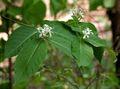 Fig. 1 Holarrhena antidysenterica Linn. and its fruit
 -
-
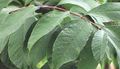 Fig. 2 Wrightia tinctoria R. Br. and its fruit
 -


Tattva Vimarsha (Fundamental Principles)
Vatsaka (Holarrhena antidysentrica Linn.Wall.) is useful in therapeutic emesis in the diseases like kushtha (dermatosis), visarpa( erysipelas).
Vidhi Vimarsha (Applied Inferences )
Synomyms of vatsaka
- Vatsaka – It is called because it grows in hilly regions of Vatsa.
- Kutaja – Because it grows wild.
- Vrksaka – It is a small tree.
- Girimallika – It bears jasmine like flowers.[6]
Synonyms according to Dhanvantari Nighantu – kautaja, kauta, vatsaka, girimallika, kalinga, mallika pushpa, indravriksha and vriksaka.[7]
Cause and effect
It is useful in raktapitta due to sheeta veerya and pacifies the kapha due to laghu, ruksha guna; tikta, kashaya rasa and katu vipaka.
The alkaloids in vatsaka have as powerful action as emetic in their immediate effect on the symptoms of intestinal amoebiasis as well as in their curative value, in such doses as one grain daily by intramuscular injections.[8]
Recent researches on action of herbs

In a research study (Chavan S.et.al., 2014), good improvement by observed by therapeutic emesis with vatsaka in patient of acne vulgaris. Indrayava churna in the quantity of 24 gm (Antarnakhamushi-closed fist) impregnated with the decoction of madhuka (Glycyrrhiza glabra Linn.) 160 ml kept there in for whole night. In the next morning it was be crushed and added with salt 10gm and honey 25 gm. The total quantity goes up to 219 ml approximately. The study concluded with following observations:
- The average vega initiation time after giving indrayava kalpa was found to be 8 minutes. The average time for vamana reflex is 6 sec i.e. opening the mouth and completion of reflex.
- The mean vamaka dose of indrayava kalpa was found to be 718.67ml
- It is found to be highly significant with respect to sankhya (number of lesions), akara (size), varna (color), rija (pain), kandu (itching), daha (burning) and global acne grading score.[9]
Future scope of research
There is much scope to study anti-hyperglycemic and anti-hyperlipidemic effect. Clinical trial may be conducted to study effect of vatsaka as emetic in psoriasis, diabetes mellitus, metabolic syndrome, hypercholesterolemia.
References
- ↑ Prof. P.V. Sharma, Dravyaguna- Vigyana, Vol.II, Chaukhambha Bharati Academy, Varanasi, Reprint 1998, pp 464.
- ↑ Kirtikar and Basu, Indian Medicinal Plants, Vol.II, second edition 1998, pp1570.
- ↑ Prof. P.V. Sharma, Dravyaguna- Vigyana, Vol.II, Chaukhambha Bharati Academy, Varanasi, Reprint 1998, pp 465.
- ↑ Ravindra Sharma, Medicinal Plants of India, 2003, Daya Publishing House, Delhi. pp 127.
- ↑ Quality Standards of Indian Medicinal Plants, Vol. I, Indian Council of Medical Research, New Delhi, 2003 pp 110.
- ↑ Prof. P.V.Sharma, Nama Rupa Gyanam, First edition 2000 pp 60-61.
- ↑ 13. Dhanvantari Nighantu, Shatpushpadi Varga, 6/13, edited by Prof. P.V. Sharma, Chaukhambha Ayurveda Pratishthan, Varanasi, Reprint 2008, 72
- ↑ Indian Medicinal Plants, Vol.II, by K.R. Kirtikar and B.D. Basu, 1998, 1572.
- ↑ 15. Chavan Santosh (2014). Study of Vaman Karma in Indrayava Kalpa in Yuvan pidaka (Acne vulgaris). Thesis research work at Department of Panchakarma of Bharati Vidyapeeth Deemed University College of Ayurveda, Pune.